Botania is a technology mod presented through natural magic. Instead of conventional cables and machine interfaces, most systems are built and operated directly in the Minecraft world using flowers, mana and purpose-built devices.
A tech mod with a natural-magic theme
Botania is commonly described as a tech mod themed around natural magic. Its progression is built around systems you can see and interact with in-world, so planning layouts and understanding how components connect matters as much as crafting the components themselves.
Botania can be played as a major progression mod on its own or alongside other compatible mods. In larger packs, recipes and balance can be changed by the pack, so the in-game Lexica Botania and the pack's own documentation are the best references for exact recipes.
Mana generation, storage and transfer
Mana is the central resource behind many Botania systems. Generating flowers create mana from specific inputs or conditions, Mana Spreaders move mana in visible bursts, and Mana Pools provide storage. Later systems add more ways to route and use mana.
Early Mana setups need only a reliable generating flower, a Mana Spreader, and a Mana Pool. Once that flow is working, expand generation and add consumers rather than building a large network before you can diagnose it.
Generating and functional flowers
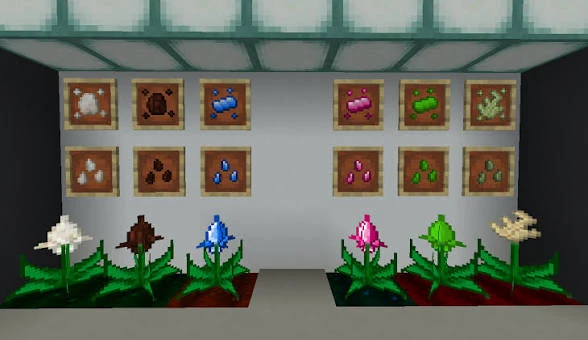
Botania separates flowers by role. Generating flowers convert resources or environmental conditions into mana, while functional flowers spend mana or react to the world to perform useful tasks. Different flowers solve different automation and utility problems.
Because these mechanics can change between versions, use the Lexica Botania included with the installed build for precise ranges, costs and recipes.
Botanical crafting systems
Progression goes beyond the standard crafting table. The Petal Apothecary handles early flower crafting, the Runic Altar is used for runes, mana infusion transforms items using a Mana Pool, and later structures introduce additional crafting and progression steps.
Visible crafting stations let you watch ingredients and Mana interact directly in your Minecraft world.
Automation without a conventional machine-room feel
Botania emphasizes automation while avoiding the usual pipe-and-GUI approach. That encourages redstone, item movement, timing and world interaction. The same mechanic can often be arranged in multiple valid layouts instead of one prescribed blueprint.
The Lexica Botania is part of the learning loop
Lexica Botania serves as the mod's in-game guide and should be treated as the first place to confirm recipes and mechanics for the version you are actually running. Online guides are useful for planning, but the installed guide remains the most version-relevant reference.
Progression and advanced content
Botania progression leads from basic flowers and Mana to runes, advanced materials, useful tools, automation, and elven trading. The result is a long-form system rather than a single block that replaces vanilla gameplay.
Best way to start
Install the exact Botania build that matches your Minecraft version and loader, complete a simple Petal Apothecary setup, then build a small mana network before attempting advanced automation.
Related Botania guides
Continue with the full guide library, the installation checklist or the troubleshooting guide.